




Double-acting hydraulic cylinders
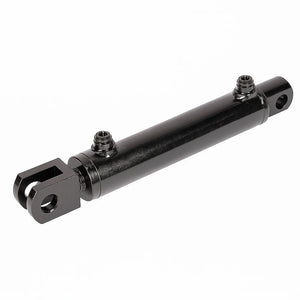
A double-acting hydraulic cylinder uses hydraulic pressure to extend and retract the piston rod, producing force in both directions. Choose the mounting arrangement first, then compare the stroke, installation length and connections of the required version.
Choose your cylinder by mounting type
Start with the mounting points on your machine. The name helps identify the group; compare the technical drawing and product specifications with your machine’s requirements.
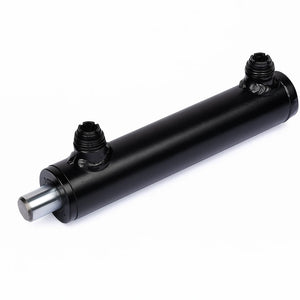
Standard
Check the design and required mounting components on the drawing.
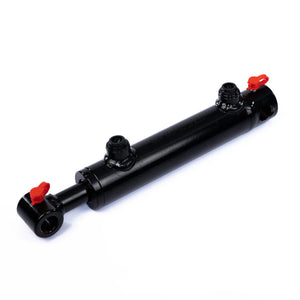
With transverse mounting holes
Check the transverse hole, pin diameter and available mounting space.
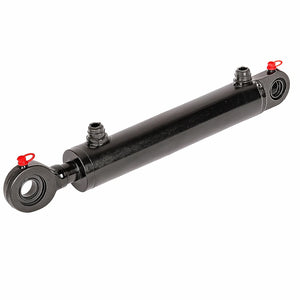
With spherical bearings
Compare bearing dimensions and installation length with your mounting points.
With clevis and eye
Check the clevis width, eye and pin diameters at both ends.
With cross tubes
Compare the width and internal diameter of the cross tubes.
With front flange
Check the bolt pattern, flange dimensions and installation space.
With rod eye and threaded fittings
Compare both mounting points and the corresponding pin diameters on the drawing.
Which double-acting hydraulic cylinder do you need?
- Mounting and pin dimensions: check both ends, hole diameters, mounting widths and clearance throughout the movement.
- Stroke: compare the travel required with the stroke of the selected variant.
- Installation length: check retracted and extended dimensions using the drawing’s reference points. Overall length and pin-center distance are not interchangeable.
- Bore and rod diameter: bore is the cylinder tube’s internal diameter. Bore, rod diameter and hydraulic pressure determine theoretical push and pull force; check the force required as well as the stroke.
- Connections and working pressure: compare thread type, port size and position. Similar diameters do not guarantee matching threads. Check the permitted working pressure in the product documentation.
Select the correct variant before checking its drawing and specifications. Have missing dimensions or unclear details confirmed before ordering.
Help choosing a replacement
Record the part number if known, stroke, installation length, bore, rod diameter, mounting dimensions and connections. Keep photographs or a drawing of the existing cylinder available. Send your question and these details via WhatsApp.
For a different design, explore custom hydraulic cylinders. For components and connections, see cylinder parts, hydraulic hoses and hydraulic fittings.
Frequently asked questions about double-acting hydraulic cylinders
What is the difference between single-acting and double-acting?
A double-acting cylinder is hydraulically powered in both directions. A single-acting cylinder is powered in one direction; an external load or a spring may provide the return movement. The right action depends on the machine and hydraulic system. See also single-acting cylinders.
Are cylinders with the same stroke interchangeable?
No. Installation length, mounting, pin dimensions, bore, rod diameter, connections and permitted working pressure must also match. Check the drawing and selected variant before ordering a replacement.
What does a transverse mounting hole mean?
The mounting hole runs across the cylinder’s longitudinal axis. Check its position and diameter on the drawing. Other mounting designs also use pins, so matching pin diameter alone is insufficient.
Are push and pull forces equal?
For a cylinder with a piston rod on one side, theoretical pull force is lower than push force at equal pressure because the effective piston area is smaller on the rod side. Check the required force in both directions and allow for actual operating conditions.
To compare other designs, view our full range of hydraulic cylinders.